“Firtashs Debt” and the Odesa Port Plant: What Can Potential Buyers Expect?
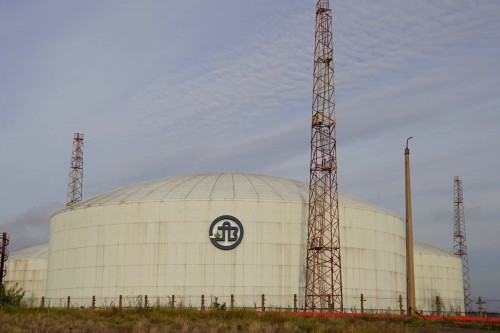
“Firtash’s Debt” and the Odesa Port Plant: What Can Potential Buyers Expect?
At a meeting with potential investors in the Odesa Port Plant, held at the State Property Fund of Ukraine, the Arzinger law firm—as part of the international The European Union Programme for State Asset Reform (EU4SAR) (implemented with the support of Expertise France)—prepared a detailed audit of legal risks.
Does the so-called “Firtash debt”—which dates back to the 2010s under an old gas contract with Ostchem—pose a threat?
To provide businesses with comprehensive legal information, we explain the lawyers’ conclusions:
1. Can they come to Ukraine and collect the money?
To enforce the Stockholm arbitration award in Ukraine, a corresponding decision by a Ukrainian court is required to recognize and enforce the arbitration award within Ukraine. Currently, the Supreme Court of Ukraine has issued final rulings: enforcement of Ostchem’s claims has been denied, as it conflicts with the public policy of the state. Furthermore, Dmytro Firtash is subject to strict personal sanctions that explicitly prohibit any payments to him or to persons associated with him until the sanctions expire.
2. Can the plant’s assets abroad be seized?
A creditor could attempt to bring a case before foreign courts, but OPP has no assets abroad whatsoever: no bank accounts, no real estate, and no stakes in companies. The plant is physically located in Ukraine, so searching for its assets in other jurisdictions would currently be futile. In addition, it is important to consider the statute of limitations for recognizing the Stockholm arbitration award in foreign jurisdictions. As a rule, in most countries, this period is limited to three years from the date the award was rendered (in our case, the award was rendered in 2016).
3. Will the new buyer have to pay out of pocket?
The state has explicitly exempted the auction winner from the obligation to pay debts owed to individuals subject to sanctions. The plant and the investor are separate legal entities. The “corporate veil” prevents the enforcement of claims against the buyer’s personal capital, accounts, or other businesses.
4. What about the investment arbitration case against Ukraine?
Ostchem filed a claim against Ukraine with an international tribunal under the Energy Charter. The defendant is exclusively the State of Ukraine. OPZ is not and cannot be a party to this proceeding; therefore, the tribunal has no right to impose any obligations or payments on the plant itself or its buyer.
5. The Russian connection and the wartime moratorium
The Supreme Court of Ukraine has confirmed that the actual beneficiary of OPP’s debt was Russia’s Gazprombank. A clear government moratorium is in effect in Ukraine (CMU Resolution No. 187), which strictly prohibits any payments to residents of the aggressor state.
“Firtash’s debt” is isolated and legally frozen. According to legal experts, the risks for the future owner are low. The debt remains largely a historical entry on paper rather than a financial threat.
The full legal opinion is now available in the virtual data room (VDR) on the “Privatization in Ukraine” website.
We thank our partners from The European Union Programme for State Asset Reform (EU4SAR)” project and the Arzinger team for their reliable legal expertise and support for transparent privatization!
The auction for the privatization of OPP will take place on October 19.